
Inside Cook County Tax Records
Cook County splits its tax work between two offices. The Board of Tax Assessors appraises property and maintains the tax roll. The Tax Commissioner prepares bills, collects payments, and handles delinquent accounts and tax sales. A complete property search uses both sources. Neither record alone answers every tax question.
| Tax record field | Meaning | Official source |
|---|---|---|
| Fair market value | The assessor's estimate of full value as of January 1. | Cook County Board of Tax Assessors |
| Assessed value | Georgia's ordinary taxable base before exemptions, set at 40 percent of fair market value. | qPublic parcel card |
| Exemptions | Approved relief that can reduce the taxable amount. | Tax Assessor |
| Bill and status | Amount billed, payment details, or delinquency information. | Cook County Tax Commissioner |
| Tax sale record | Official notice and office confirmation for delinquent property offered at sale. | Tax Commissioner and legal notices |
Cook County tax records hold several distinct figures: fair market value, assessed value, taxable value, tax due, and sale price. None of these numbers is interchangeable. A private sale may land above or below the assessor's estimate. Exemptions shrink the taxable base while leaving the fair market figure untouched. The tax bill itself comes from applying local millage to the taxable assessment. Want to dig deeper into what these values mean? See the Cook County property value record.
Cook County's Two Tax Offices
The Board of Tax Assessors keeps ownership on the tax roll, parcel data, appraisals, returns, exemption applications, and assessment appeals. Its office sits at 209 N. Parrish Avenue in Adel, and its published phone number is (229) 896-3665. The free Cook qPublic search opens the parcel card.
The Tax Commissioner works from 209 N. Parrish Avenue, Suite C. Its listed number is (229) 896-4569. That office collects property tax and publishes the official payment and tax-sale routes, while the assessor settles value questions. Send a value dispute to the assessor. Send payment or delinquent-bill questions to the Tax Commissioner. Knowing the split keeps a request from bouncing.
Cook County's 40 Percent Rule
Georgia property is generally assessed at 40 percent of fair market value. Cut the market figure by more than half. The assessed value starts at four-tenths of it. Approved exemptions come next. Then millage produces the tax due. A mill is one dollar of tax for each thousand dollars of taxable value.
That formula is statewide law. Local millage and exemptions set the final Cook County property tax. It also explains why the value printed on a bill may sit far below an expected sale price. The smaller figure is not an error. It is the assessed amount, not full fair market value.
Keep the numbers separate. The assessed figure supports taxation; it is not a sale forecast or a private appraisal.
Cook County Tax Calendar
Cook County's official property page sets real-estate returns between January 1 and April 1. A return reports a property value for the tax year. Homestead applications must reach the assessor by April 1 too. Miss that date and the benefit waits a year. Once granted, the county says, homestead renews automatically while eligibility continues. The Cook County property-tax instructions bring the assessment formula, return period, exemptions, and appeal route together.
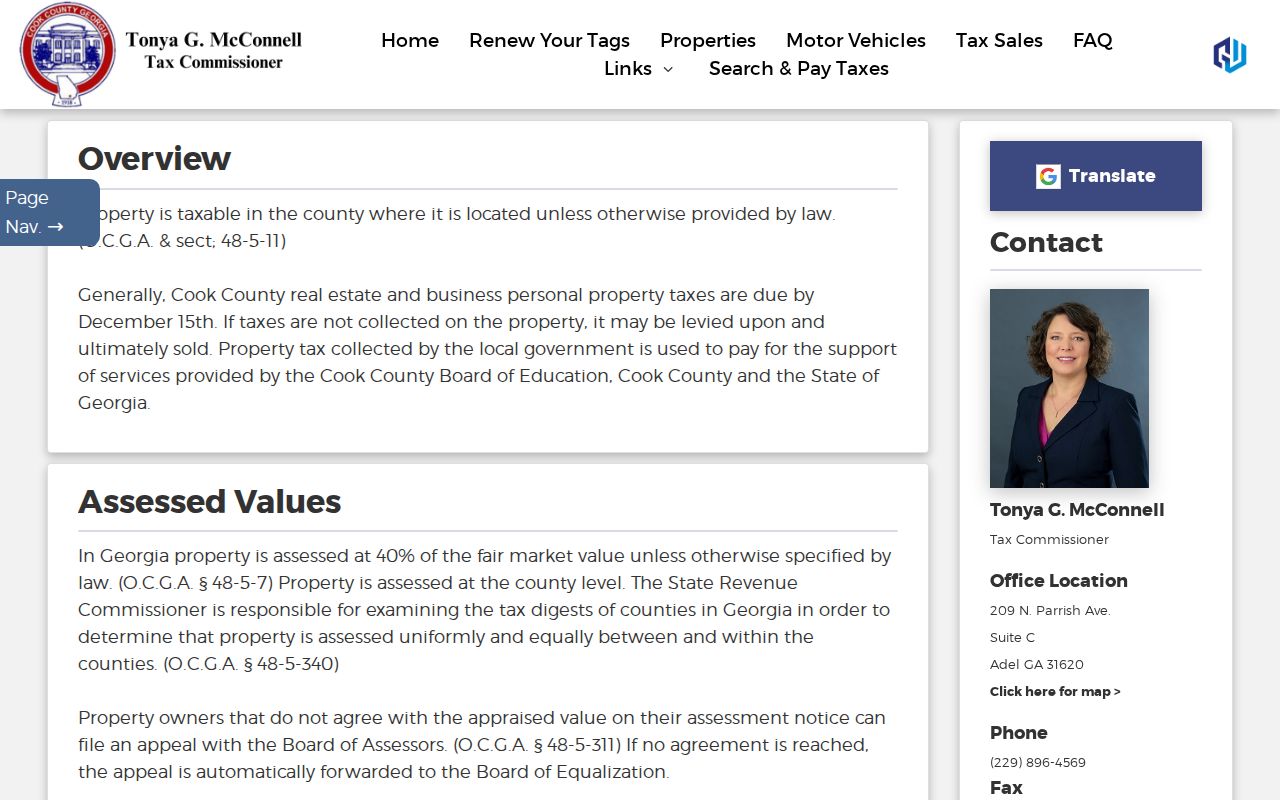
The county's official deadlines belong to the assessor, while billing and collection work lands later with the Tax Commissioner.
Georgia does not run one fixed statewide revaluation cycle. The assessor reviews property yearly and issues an assessment notice when required. Keep the notice envelope. Write down the mailing date. The appeal clock runs from the notice, not from the later tax bill.
Retrieve a Cook County Tax Bill
The Tax Commissioner links to Government Window for online tax access. Have the parcel number ready. Expect an interactive check along the way. If the portal fails, call the office, use mail, or visit the counter rather than assuming no record exists.
- Find the parcel in Cook qPublic by address, owner, or parcel number.
- Copy the parcel number exactly, including any spaces or letters.
- Open the Tax Commissioner's Government Window tax link and locate the bill.
- Compare fair market value, assessed value, exemptions, year, and payment status.
- Call the correct office about a mismatch before making a time-sensitive decision.
- Assessed value
- The statutory portion of fair market value used as the starting tax base.
- Millage rate
- The rate applied per thousand dollars of taxable value.
- Homestead exemption
- Tax relief for a qualifying owner-occupied home after approval.
- Tax lien
- A public claim tied to unpaid tax; verify its release and status.
Search Cook County Tax Fields
Free qPublic searches run by owner name, physical address, or parcel number. Those are the best starting keys for property tax records. The sample parcel card fields carry into the bill search.
| Search key | Best use | Check in the result |
|---|---|---|
| Physical address | Known house or site | Exact situs, parcel ID, taxing district |
| Owner name | Finding all matching roll entries | Name order, entity spelling, mailing address |
| Parcel ID | Cross-office match | Letters, suffixes, spaces, current card |
The sample card also shows class code, acres, assessed value, and two sales rows. Those fields identify the land. They cannot prove a bill was paid. Payment status lives with the Tax Commissioner.
Cook County Delinquency Records
The Tax Commissioner maintains an official Tax Sales page. It publishes no current sale list. Treat the page as a route to the office, not proof that a parcel is or is not scheduled for sale. Check current legal notices too. Call the Tax Commissioner for the sale date, amount, redemption issues, and current status. The official Cook County tax-sales page is the place to start.
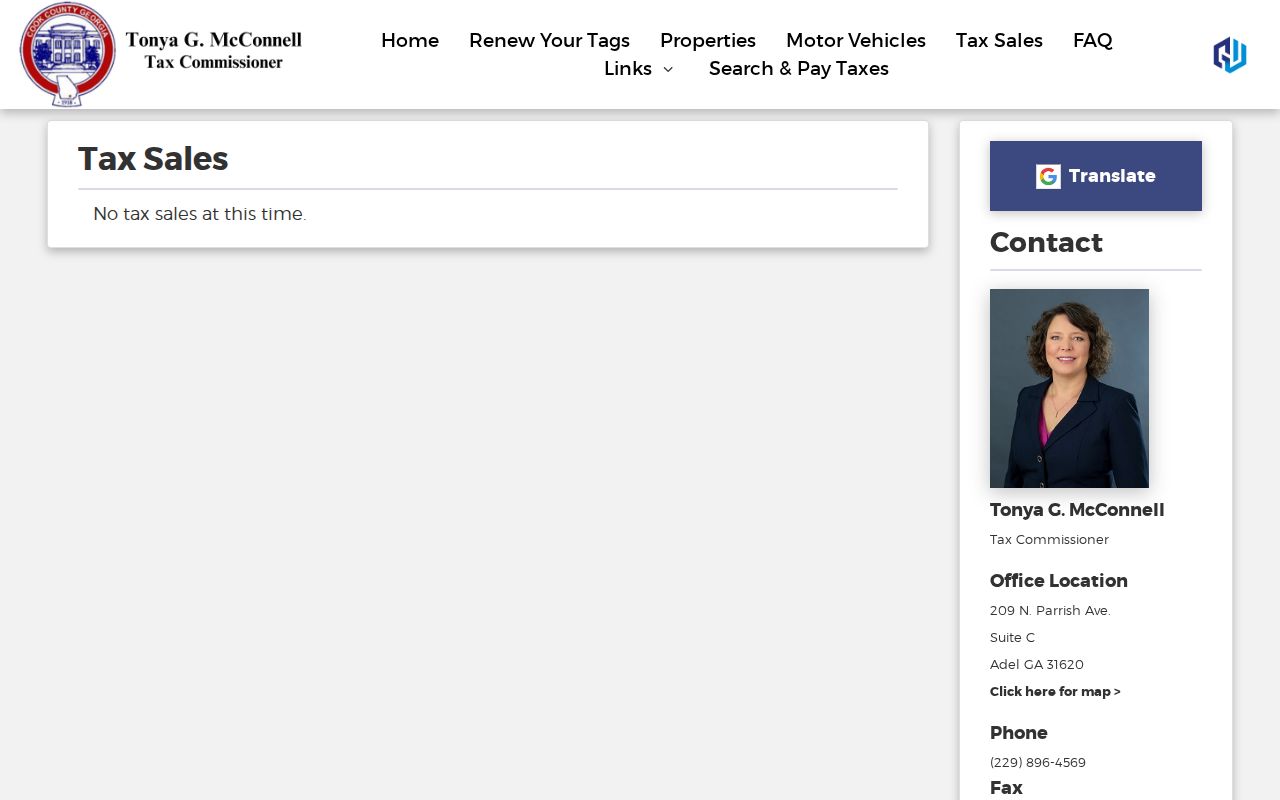
The tax-sales page gives the official route for questions. It offers no complete current parcel list. A delinquent bill, lien docket entry, and tax execution mark different stages of the same process. A notice and completed tax deed mark later stages. Never infer a change of ownership from a sale notice. Confirm any completed conveyance with the Cook County Clerk of Superior Court. Then check the recorded instrument.
Cook County Payment Warning
The Tax Commissioner posts a payment-scam warning on its site. The office takes no wire, ACH, or electronic payments. It never asks for bank-account information. Payment belongs on the official website, in person, or by mail or courier. That makes an unexpected caller demanding fast payment a serious red flag. Before paying, verify the web address against the Tax Commissioner's own page. Call the office number it publishes. Never use contact details supplied in a suspicious message. The warning concerns payment method and identity. It does not tell you whether a parcel truly carries a Cook County tax balance.
Contest a Cook County Assessment
Georgia allows 45 days from the assessment notice date to appeal. The clock matters more than anything else. An owner may dispute value, uniformity, taxability, or exemptions. File with the Cook County Board of Tax Assessors. Keep proof of delivery. Comparable sales, photographs, a recent appraisal, repair evidence, surveys, and corrected parcel facts can all support the stated ground.
The assessor reviews the appeal first. Later routes include the county Board of Equalization, arbitration, or a hearing officer where Georgia rules allow. A phone call does not preserve the deadline, so follow the method printed on the notice and submit a clear written appeal with the documents that fit your ground.
Appeal window. File within 45 days of the notice date with the Cook County Board of Tax Assessors; a bill complaint is not a timely value appeal.
Offline Cook County Tax Access
Online access helps, but it is not the only channel. The Cook County assessor and Tax Commissioner share the Parrish Avenue office complex in Adel. Both publish phone contact. Use the counter when the portal cannot display a record, mail a focused request, or submit a written Georgia Open Records Act request for existing nonconfidential tax or assessment records. A good written request names the parcel, address, record type, and date range. Georgia agencies must generally respond within three business days.
The response is production or a written status, cost estimate, timeline, or exemption citation. Staff need not create a new analysis. Ask for electronic copies when practical. Search and production costs may apply after the first fifteen minutes. The state copying standard is ten cents per page.